
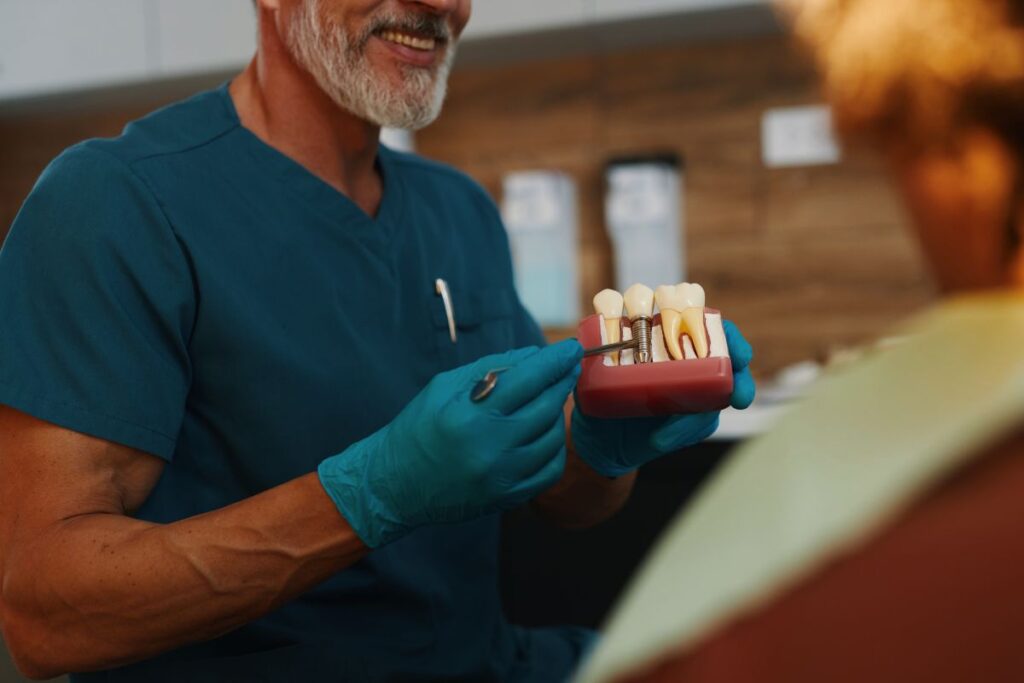
Tooth loss can affect far more than your smile. It can change the way you eat, speak, and feel about your appearance. Fortunately, modern dentistry offers several reliable tooth replacement options. The most common choices are dental implants, dental bridges, and dentures. While each solution restores missing teeth, they work in very different ways and offer distinct benefits.
Understanding how these treatments differ helps patients make informed decisions about long-term oral health, comfort, and function.
Understanding the Three Tooth Replacement Options
Dental Implants
Dental implants are artificial tooth roots made from biocompatible materials such as titanium. They are placed directly into the jawbone, where they gradually fuse with the bone through a natural process called osseointegration.
Once healed, the implant supports a custom crown that looks and functions like a natural tooth.
Key characteristics include:
-
Anchored directly in the jawbone
-
Independent support without relying on nearby teeth
-
Designed to mimic the strength and stability of natural roots
-
Helps maintain bone density
Dental Bridges
A dental bridge replaces one or more missing teeth by anchoring a prosthetic tooth between two healthy teeth. The surrounding teeth are reshaped and fitted with crowns to hold the bridge in place.
Important points about bridges:
-
Supported by neighboring teeth
-
Fixed in place and not removable
-
Effective for filling small gaps in the smile
-
Requires altering adjacent natural teeth
Dentures
Dentures are removable appliances used to replace several or all missing teeth. They sit on top of the gums and rely on suction, adhesives, or clasps for stability.
Common features include:
-
Removable for cleaning and storage
-
Designed for partial or full tooth replacement
-
Can restore facial structure and chewing ability
-
May require periodic adjustments
Key Differences That Set Dental Implants Apart
While all three treatments restore missing teeth, implants provide unique advantages that make them stand out.
Jawbone Preservation
When a tooth is lost, the jawbone beneath it begins to shrink due to lack of stimulation. Dental implants replace the tooth root and stimulate the bone during chewing.
Bridges and dentures sit above the gumline and do not interact with the bone. Over time, this can contribute to gradual bone loss and changes in facial structure.
Stability and Function
Implants function very similarly to natural teeth. Because they fuse with the bone, they provide strong bite force and stability.
Dentures can sometimes shift while speaking or eating. Bridges are stable but depend on neighboring teeth for support.
According to research published in implant dentistry studies, implant-supported restorations can restore up to 90 percent of natural chewing efficiency, compared with lower efficiency for removable dentures.
| Tooth Replacement Type | Jawbone Support | Stability | Removable |
|---|---|---|---|
| Dental Implants | Yes | Very High | No |
| Dental Bridges | No | High | No |
| Dentures | No | Moderate | Yes |
Protection of Natural Teeth
A major difference lies in how surrounding teeth are treated.
Dental bridges require reshaping healthy teeth to hold the restoration. This process permanently alters the enamel structure of those teeth.
Implants stand independently. They do not require support from neighboring teeth, allowing surrounding teeth to remain untouched.
Long-Term Oral Health
Because implants replace both the root and crown of a missing tooth, they help maintain the natural alignment and spacing of the smile.
Patients exploring options like dental implants in Hawthorn Woods, IL often appreciate how implants support long-term oral health while maintaining natural bite balance and bone structure.
Comfort and Daily Convenience
Many people find implants more comfortable because they feel like natural teeth. There is no removal at night and no need for adhesives.
Dentures, on the other hand, may require removal for cleaning and adjustments as gum tissues change over time.
Situations Where Bridges or Dentures May Still Be Considered
Although implants provide many advantages, bridges and dentures still serve important roles.
Dentists may recommend them when:
-
Multiple teeth are missing across a larger area
-
Jawbone density needs improvement first
-
Patients prefer removable appliances for flexibility
Each option has its own clinical considerations. A dental professional evaluates factors such as bone health, bite alignment, oral hygiene, and overall dental goals before recommending a solution.
Trending FAQs About Dental Implants, Bridges, and Dentures
Many patients researching tooth replacement ask similar questions online. Here are some commonly searched questions with clear answers.
-
Are dental implants better than bridges?
Implants offer advantages such as bone preservation and independence from neighboring teeth. However, the best option depends on the patient’s oral health and treatment goals. -
How long do dental implants last compared to dentures?
Implants are designed for long-term durability and stability. Dentures typically require adjustments or replacement over time as the mouth changes. -
Do dental implants feel like real teeth?
Yes. Because implants fuse with the jawbone, they often feel very similar to natural teeth when chewing and speaking. -
Can dentures replace multiple missing teeth?
Yes. Dentures are commonly used when several or all teeth are missing. They can restore both appearance and basic function. -
Is a dental bridge permanent?
Bridges are fixed restorations, meaning they are not removable by the patient. However, they rely on neighboring teeth for support.
Making the Right Choice for Your Smile
Choosing the right tooth replacement option involves understanding both immediate and long-term oral health needs. Stability, bone health, comfort, and preservation of surrounding teeth all play important roles in the decision.
If you are researching treatment options or if you are searching for a dentist near Hawthorn Woods, IL, a personalized consultation can help clarify which solution aligns best with your smile goals and dental health.
Dental implants, bridges, and dentures all restore missing teeth, but their design and long-term impact differ significantly. Learning how each option works allows patients to move forward with confidence and clarity about their treatment path. To explore the best solution for your smile, contact a dental professional today to schedule an appointment.