
You bite into a crunchy snack and feel a sharp twinge in your tooth. At your next dental visit, your dentist finds a cavity or an old filling that has started to break down. You expect a quick repair, but there is a catch: the tooth may need a crown instead of another filling.
Why would a dentist recommend a crown when a filling seems like the simpler choice? The answer depends on how much healthy tooth structure remains, how deep the damage goes, and how well the tooth can handle the pressure of daily chewing.
Both treatments repair damaged teeth, but they serve different needs. A filling works well for many small and moderate cavities. A crown covers the visible part of a tooth and provides added support when more of its structure has been lost.
For patients exploring crowns in Hawthorn Woods, understanding these differences can make a dental visit less stressful and help them take part in treatment decisions. The goal is not to choose the bigger treatment. It is to find the simplest option that can restore the tooth and protect it from further harm.
What Is the Difference Between a Crown and a Filling?
A filling and a crown both help restore a damaged tooth, but they repair it in different ways.
How a Dental Filling Works
A dental filling repairs a part of the tooth damaged by decay or minor injury. The dentist removes the decayed tissue, cleans the affected area, and fills the space with a suitable material.
Tooth-colored composite fillings are common because they can blend with the natural shade of the tooth. They are often used for cavities in front and back teeth.
A filling is a good choice when enough healthy tooth structure remains to support the repair. It allows the dentist to fix the damaged area without covering the entire visible tooth.
For example, a small cavity on the side of a molar may need only a filling. Once the decay is removed and the tooth is restored, the remaining structure can continue to handle normal biting forces.
How a Dental Crown Works
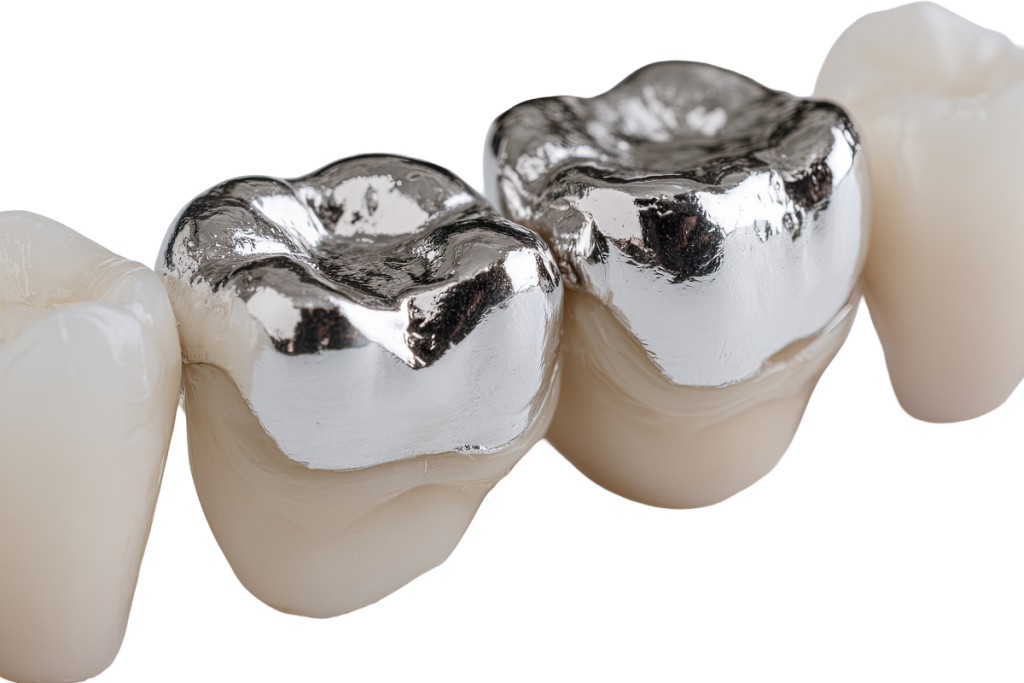
A dental crown, also called a cap, covers the visible portion of a tooth above the gumline. It restores the tooth’s shape and helps protect weak or damaged areas.
The dentist may recommend a crown when a cavity is too large for a filling, a tooth has a major crack, or an old restoration has left too little healthy structure to support another repair.
Crowns can be made from materials such as porcelain, ceramic, metal alloys, or a combination of materials. The right choice depends on the tooth’s location, the force it must withstand, appearance, and other patient needs.
Unlike a filling, a crown usually requires the dentist to reshape some of the tooth so the cap can fit over it.
The key difference: A filling repairs a damaged section of a tooth, while a crown covers the tooth to provide broader support.
How Dentists Decide Which Treatment You Need
There is no single cavity size or fixed rule that determines when a tooth needs a crown. Dentists look at several factors before recommending treatment.
1. How Much Healthy Tooth Structure Remains?
This is one of the most important factors.
A tooth with a small cavity may still have strong walls that can support a filling. However, when decay destroys a large part of the tooth, the remaining walls may become thin and weak.
Adding more filling material does not always solve the problem. The tooth itself must be strong enough to withstand the pressure of biting and chewing.
A crown may offer better protection when too much of the natural tooth has been lost.
2. How Large Is the Cavity?
The size and location of a cavity affect the type of repair needed.
A small cavity may require little more than a filling. A larger cavity that reaches several surfaces of a tooth can leave less healthy structure behind.
For instance, a molar with decay across its chewing surface and extending down both sides may be at greater risk of breaking than a tooth with a small cavity on one surface.
In these cases, the dentist considers whether a filling can restore the tooth without leaving its remaining structure vulnerable.
3. Is the Tooth Cracked or Broken?
A cracked tooth can cause pain when you bite down or release your bite. You may also notice sensitivity to cold drinks or discomfort that comes and goes.
Small chips and limited damage may be repaired with a filling or bonding. A deeper crack, especially in a back tooth, may require a crown to hold the remaining structure together and reduce the risk of further damage.
However, not every crack can be treated with a crown. If the crack extends too far below the gumline or into the root, the tooth may need a different treatment.
The dentist must assess the crack’s depth and direction before choosing a repair.
4. Does the Tooth Have a Large or Failing Filling?
A filling does not last forever. Over time, it may wear down, chip, loosen, or develop decay around its edges.
If the damaged area is small, replacing the filling may be enough. But if a large portion of the tooth has already been replaced by filling material, removing the old restoration may reveal weak or thin walls.
At that point, another filling could leave the tooth at risk of fracture.
A crown may be the more suitable choice when the remaining natural structure cannot safely support another large filling.
5. Has the Tooth Had Root Canal Treatment?
Root canal treatment removes infected or inflamed tissue from inside a tooth. The dentist then cleans and seals the inner space.
The tooth may need a crown afterward, particularly when it is a back tooth that handles strong chewing forces or has lost a large amount of structure.
A crown helps protect the remaining tooth from breaking during daily use.
Not every tooth treated with a root canal automatically needs a crown. The dentist considers the tooth’s location, the amount of remaining structure, and the type of restoration needed.
Crown vs Filling: A Quick Comparison Chart
The following chart explains how the two treatments compare in common dental situations.
| Factor | Dental Filling | Dental Crown |
| Main purpose | Repairs a damaged section | Covers and supports the visible tooth |
| Best suited for | Small to moderate cavities and limited damage | Extensive decay, major fractures, or weakened teeth |
| Tooth preparation | Removes decay and shapes the affected area | Removes decay and reshapes the tooth for coverage |
| Coverage | Restores only the affected area | Covers most or all of the visible tooth |
| Common materials | Composite resin and other filling materials | Ceramic, porcelain, metal alloys, or other crown materials |
| Number of visits | Often completed in one visit | May require more than one visit, depending on the method used |
| Main concern | May not provide enough support for a badly weakened tooth | Requires more tooth preparation than a typical filling |
| Long-term care | Regular brushing, flossing, and dental checkups | The same daily care, along with regular checks of the crown and surrounding tooth |
Keep in mind: Neither treatment lasts forever. The lifespan of a filling or crown depends on the material, the size of the repair, oral hygiene, bite forces, and other factors. Your dentist can explain what to expect in your case.
Why a Filling May Not Be Enough
It is natural to prefer a filling because it often involves less tooth preparation. Still, choosing a smaller repair is not always the best way to preserve a tooth.
Imagine a molar with a large, old filling. Over time, the tooth’s natural walls have become thin. If the dentist replaces the filling without addressing the weakness, the tooth may crack under the pressure of chewing.
A crack can turn a manageable problem into a more serious one. Depending on its depth, the tooth might need more extensive treatment or may no longer be repairable.
This does not mean every large filling should be replaced with a crown. A sound filling that has no signs of decay or damage does not need to be removed simply because it is old.
The dentist must weigh the benefits of a new filling against the risk of leaving a weakened tooth without enough support.
The National Institute of Dental and Craniofacial Research explains that fillings repair cavities, while crowns are used to restore teeth that have broken down more extensively.
What Happens During the Dental Exam?
Before recommending either treatment, the dentist examines the tooth and looks for signs of decay, cracks, worn restorations, and changes in the surrounding gums.
The process may include the following steps.
1. A visual exam: The dentist checks the tooth’s surface, existing fillings, and visible damage.
2. Bite and sensitivity checks: If needed, the dentist checks how the tooth responds to pressure, temperature, or other tests.
3. Dental X-rays: Images can help reveal decay between teeth, the depth of some cavities, and problems around the roots that may not be visible during a regular exam.
4. Review of your dental history: Previous fillings, root canal treatment, tooth grinding, and past fractures can affect the decision.
5. Treatment planning: The dentist explains the available options, their benefits and limits, and the likely outcome of each approach.
An X-ray does not always show the full extent of a crack, so the dentist may need additional tests. The final recommendation depends on the findings from the complete exam.
If you are comparing crowns in Hawthorn Woods with other restorative options, ask your dentist to explain what makes the tooth strong enough for one treatment but not the other. A clear explanation should connect the recommendation to the condition of your tooth.
Can a Crown Save a Tooth?
In many cases, yes. A crown can restore a tooth that has lost substantial structure but still has enough healthy tissue to support a repair.
For example, a tooth with a large cavity may remain a good candidate for a crown after the dentist removes the decay. Covering the tooth can help it withstand daily chewing and reduce the chance of further breakage.
But a crown cannot fix every problem.
If decay reaches the pulp, the soft tissue inside the tooth, root canal treatment may be needed before the tooth is restored. If a crack extends deep into the root, the tooth may not be repairable.
The aim is to preserve a natural tooth whenever it can be restored safely. A crown is one tool for doing that, not a guarantee that a tooth can be saved.
What About Cost, Comfort, and Appearance?
The best treatment is not based on strength alone. Cost, appearance, comfort, and long-term care also matter.
Cost and Insurance
A filling usually costs less than a crown because the procedure and materials are generally less involved. The total cost depends on the size of the repair, the material used, and the dental office’s fees.
Dental insurance may cover part of either treatment, subject to the plan’s rules. Before treatment, ask for a written estimate that includes any related procedures.
It is also worth asking what may happen if you choose a filling when the dentist recommends a crown. Understanding the risks and likely future costs can help you make an informed choice.
Comfort During Treatment
Both procedures are commonly performed with local anesthetic to keep you comfortable.
A filling often requires less time in the dental chair. A crown usually involves more tooth preparation and may require a temporary crown while the final one is made.
Some mild sensitivity can occur after either treatment. However, severe pain, swelling, or discomfort that worsens should be checked by a dentist.
Appearance and Function
Tooth-colored fillings can blend well with natural teeth. Crowns can also be made to match nearby teeth, especially when appearance is important.
For back teeth, the dentist also considers chewing forces and the material’s strength. The best option balances function, appearance, and the amount of protection the tooth needs.
What Can You Do to Help Your Restoration Last?
Whether you receive a filling or a crown, daily care plays a major role in keeping the tooth healthy.
Follow these steps:
- Brush twice a day with fluoride toothpaste.
- Clean between your teeth daily with floss or another suitable tool.
- Limit frequent sugary snacks and drinks that can increase the risk of decay.
- Avoid chewing ice or very hard objects, which can damage teeth and restorations.
- Wear a night guard if your dentist recommends one for grinding or clenching.
- Attend regular dental checkups so your dentist can look for new decay, worn fillings, and changes around a crown.
Pay attention to changes in how your teeth feel. Pain when biting, a rough or broken filling, or sensitivity that does not settle may signal a problem.
The American Dental Association’s MouthHealthy resource on crowns explains how crowns can protect weak teeth and restore teeth that are broken or have large fillings.
When Should You See a Dentist?
Do not wait for a tooth to hurt before having it checked. Cavities can develop without clear symptoms, and early decay may be easier to treat than extensive damage.
Arrange a dental exam if you notice:
- A new hole or dark spot on a tooth.
- Pain when chewing.
- A filling that feels loose, rough, or broken.
- Sensitivity to hot, cold, or sweet foods that persists.
- A chipped or cracked tooth.
- Food repeatedly getting trapped around a damaged filling.
Seek urgent dental care if you have severe tooth pain, facial swelling, or signs of infection. Fever with facial swelling or trouble swallowing or breathing needs prompt medical attention. If breathing or swallowing is difficult, seek emergency care.
For people living in Hawthorn Woods and nearby Lake County communities, including Lake Zurich, Kildeer, and Long Grove, knowing where to seek dental care can make it easier to address a problem before it worsens.
If you are unsure whether a tooth needs a new filling or a crown, an exam can help identify the cause and the available options.
Making the Right Choice for Your Tooth
A filling is often the right choice when damage is limited and enough healthy tooth structure remains. A crown is often better when decay, cracks, or a large old restoration have left the tooth too weak for a filling alone.
The decision should come from the tooth’s condition, not from the size or cost of the treatment. A crown is not automatically better, and a filling is not always enough.
At Hawthorn Woods Family Dental Care, patients can learn more about restorative options through the practice’s dental fillings and crowns and caps service pages.
If a tooth hurts, has a broken filling, or has been flagged for a crown, schedule a dental exam before the problem gets worse. Ask what the exam shows, why a treatment is recommended, and whether a less extensive option can safely restore the tooth. A clear plan can help you protect your natural teeth and make a choice that fits your oral health needs.
Frequently Asked Questions
1. Can a small cavity need a crown?
Most small cavities can be treated with fillings. A crown may be needed if the tooth is already weak from a large old filling, a crack, or other damage. The dentist must assess the whole tooth before making a recommendation.
2. Does getting a crown hurt?
The dentist usually numbs the tooth and nearby area before preparing it. You may feel pressure during the procedure, but you should not feel sharp pain. Mild soreness or sensitivity afterward can occur.
3. How long does a dental filling last?
A filling may last several years or longer, depending on its material, size, location, and how much pressure it handles. Regular checkups help your dentist find wear or damage before it causes more trouble.
4. How long does a dental crown last?
A crown can last many years with proper care, but it may eventually need repair or replacement. Grinding, poor oral hygiene, new decay, and damage from hard foods can affect how long it lasts.
5. Can a crown be placed over an old filling?
Yes. If a tooth with a large filling has become weak, a crown may be used to cover and support it. The dentist first checks for decay, cracks, and other problems that could affect the result.
6. Is a crown always needed after root canal treatment?
No. Many back teeth need crowns after root canal treatment because they face strong chewing forces or have lost a lot of structure. Some teeth may be restored with other options, depending on their condition.
7. Can I replace a crown with a filling to save money?
A filling may cost less, but it cannot always provide the support a weakened tooth needs. Ask your dentist whether a filling is a safe option and what risks it may carry. Choosing a smaller repair that fails may lead to more treatment later.
8. What happens if I delay treatment for a damaged tooth?
Decay can spread, a crack can grow, and a weakened tooth may break further. In some cases, the tooth may need root canal treatment or extraction. Early assessment gives your dentist a better chance of treating the problem before it becomes more serious.