
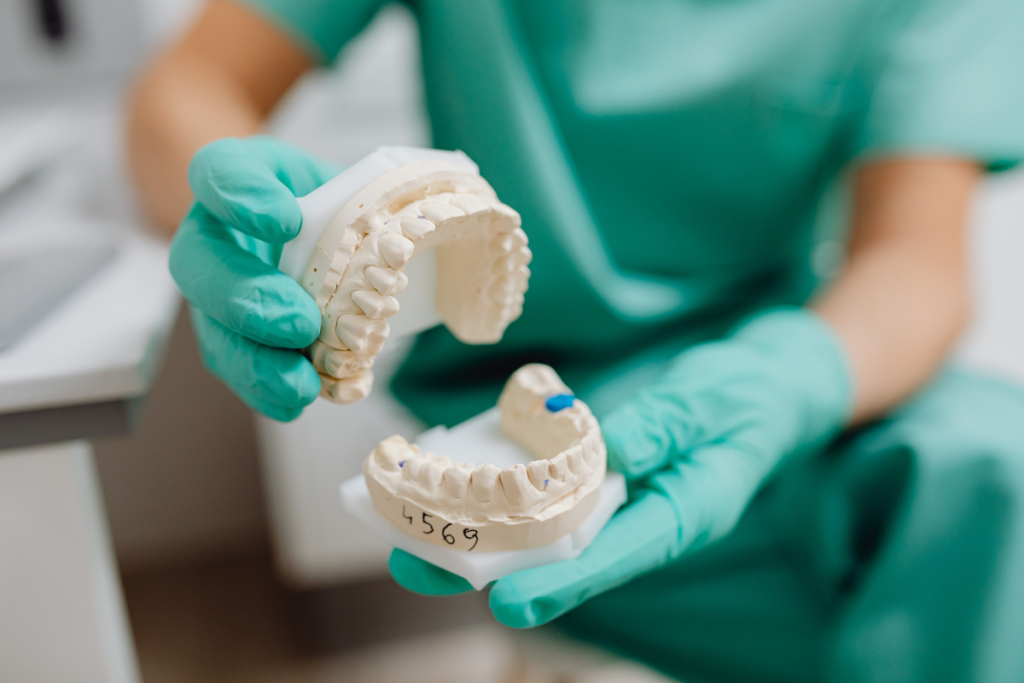
You want straighter teeth, but a few of them already have dental crowns. Perhaps you had a root canal years ago, needed a crown after a tooth broke, or received several restorations to repair past damage. Now, you are wondering whether clear aligners can still help you get the smile you want.
The good news is that having dental crowns does not automatically rule out Invisalign treatment. Teeth with crowns can often be moved with orthodontic treatment, but your dentist must check the condition of each tooth and plan the movements with care.
The type of crown, the health of the tooth beneath it, your bite, and the movements needed all affect your treatment options. Some patients can wear clear aligners without major changes to their plan. Others may need special attachments, a different approach, or treatment with braces.
For adults considering Invisalign in Hawthorn Woods, understanding how crowns and clear aligners work together can help set clear expectations before treatment begins.
Can You Straighten Teeth That Have Dental Crowns?
Yes, many patients with dental crowns can straighten their teeth with clear aligners. A crown covers the visible part of a tooth, but the natural tooth root remains in the jaw in most cases. Orthodontic treatment moves the tooth through the bone, so the presence of a crown does not prevent movement on its own.
However, a crowned tooth may respond to treatment differently from a tooth with natural enamel exposed. The dentist must consider how to apply the right force and whether the tooth can handle the planned movement.
Why the Type of Restoration Matters
Not all dental restorations are the same. A patient with one crown on a back tooth may have different needs from someone with several crowns, veneers, bridges, or implants.
Before recommending treatment, the dentist needs to know:
- How many teeth have restorations.
- Whether the crowns are secure and in good shape.
- Whether there is decay or damage around any crown.
- Whether the teeth have had root canal treatment.
- How much tooth movement is needed.
- Whether the bite puts extra pressure on the restored teeth.
These details help the dentist decide if clear aligners are a good fit and how to protect existing dental work during treatment.
How Clear Aligners Work Around Dental Crowns
Clear aligners are custom-made trays that fit over your teeth. Each set applies gentle pressure to guide teeth toward planned positions over time.
For treatment to work, the trays must fit well and apply force in the right places. Dental crowns can affect how the aligners grip a tooth, especially when the crown has a shape or surface that differs from natural enamel.
1. The Dentist Checks the Fit of the Trays
A crown may have a smooth surface or a shape that changes how an aligner sits over the tooth. If the tray does not fit as planned, the tooth may not move as expected.
The dentist checks the fit and may adjust the treatment plan to improve how the aligners guide the tooth.
2. Attachments May Need Special Care
Some aligner plans use small tooth-colored attachments to help move teeth in certain directions. These attachments are often bonded to natural teeth, but placing them on a crown can be more complex.
The material used for the crown affects how well an attachment can bond. The dentist may need a different bonding method, change the attachment plan, or avoid placing an attachment on that crown.
This does not mean every crowned tooth needs an attachment. The need depends on the movement required.
3. The Dentist Tracks Tooth Movement
During treatment, regular checks help the dentist see whether the teeth are moving as planned. A crowned tooth that does not track well may need a change to the aligner plan.
Patients should not switch to the next set early or force a tray into place if it does not fit. Doing so can place unwanted pressure on teeth and restorations.
What Types of Dental Restorations Can Affect Treatment?
A crown is only one type of restoration that may affect orthodontic care. The treatment plan can change based on the type and location of the dental work.
Dental Crowns
Crowns cover damaged or weakened teeth and help restore their shape and function. A crown that is secure and in good condition may remain in place throughout aligner treatment.
If a crown is loose, cracked, or affected by decay, the dentist may need to repair or replace it before starting orthodontic care.
Veneers
Veneers cover the front surface of teeth and are often used to improve their shape or color. They do not always prevent tooth movement, but the dentist must take care when planning attachments and other steps that involve the veneer surface.
The goal is to avoid damage to the veneer while guiding the tooth into a healthier position.
Dental Bridges
A bridge replaces one or more missing teeth by joining an artificial tooth to nearby supporting teeth. Because the connected teeth work as a unit, moving them can be more complex than moving separate natural teeth.
The dentist must check whether the bridge affects the planned movement. Some patients may need a different orthodontic approach.
Dental Implants
Dental implants are different from natural teeth. An implant is fixed to the jawbone and does not move in the same way as a natural tooth during orthodontic treatment.
An implant may still be part of a treatment plan, but the dentist must plan tooth movement around its fixed position. This is especially important when nearby teeth need to move or when spaces must be closed.
Comparing Restorations During Treatment
The following chart shows how common dental restorations may affect a clear aligner plan.
| Type of restoration | Can the tooth be moved? | Main concern |
| Dental crown | Often, if the natural tooth is healthy | Aligner fit and attachment bonding |
| Veneer | Often, with careful planning | Protecting the veneer surface |
| Dental bridge | Depends on the bridge and treatment goals | Connected teeth may limit movement |
| Dental implant | The implant itself does not move like a natural tooth | Planning natural tooth movement around its fixed position |
| Large filling | Often, if the tooth is stable | Checking the tooth for cracks or weakness |
Important: This chart offers general guidance, not a diagnosis. The dentist must assess your restorations, gums, bite, and tooth health before choosing a treatment plan.
Should You Replace Your Crowns Before Starting Treatment?
Not always. Replacing a crown simply because you want straighter teeth may add cost and require more dental work without improving the result.
If a crown is healthy, secure, and likely to last through treatment, the dentist may recommend keeping it in place. The aligner plan can then be built around the existing restoration.
However, there are times when a crown should be repaired or replaced before treatment begins.
When Replacement May Be Needed
Your dentist may recommend treating a crown first if it:
- Has a crack, chip, or loose fit.
- Shows signs of decay near the edge.
- Causes pain or discomfort.
- No longer fits your bite well.
- Is unlikely to remain stable during the planned treatment.
The timing of a new crown also matters. If the tooth’s position will change a lot, it may make sense to wait until after orthodontic treatment before placing the final crown.
For example, a front tooth may need a new crown to improve its shape and color. If that tooth will move during treatment, placing the final crown too early could mean that its position or appearance will need to be reviewed again later.
The dentist should explain whether it is better to complete the restoration first, after aligner treatment, or in stages.
What If You Have Had a Root Canal?
A tooth that has had root canal treatment can often be moved with orthodontic care. However, the dentist must check its strength and the condition of the restoration.
Root canal treatment removes infected or inflamed tissue from inside a tooth. The tooth may then need a crown to protect the remaining structure, especially if it has lost a large amount of natural tooth material.
Before starting aligners, the dentist checks that the tooth is stable and that there are no signs of ongoing infection or other problems.
A root canal does not automatically prevent clear aligner treatment. Still, a tooth with a history of infection, a crack, or a large restoration may need closer review.
If you notice pain when biting, swelling, or a change in how the tooth feels, have it checked before moving forward with orthodontic care.
What Happens During the First Visit?
A proper exam helps the dentist decide whether clear aligners can safely meet your goals. It also gives you a chance to discuss concerns about existing dental work before committing to treatment.
Here is what the process may include.
Step 1: Review your dental history. Tell the dentist about crowns, root canals, bridges, implants, past dental injuries, and any recent changes in your bite.
Step 2: Check your teeth and gums. The dentist looks for decay, loose restorations, gum disease, and other issues that may need care first.
Step 3: Assess your bite. The way your upper and lower teeth meet can affect which movements are needed and whether aligners are suitable.
Step 4: Record your teeth. The dentist may use digital scans, photographs, and X-rays when needed to assess your teeth and plan treatment.
Step 5: Review your options. You can discuss the expected treatment time, care needs, risks, costs, and whether braces may be a better choice.
For patients exploring Invisalign in Hawthorn Woods, this visit should focus on both tooth alignment and the long-term health of existing restorations.
How to Protect Your Dental Work During Treatment
Your daily habits matter throughout orthodontic care. Clear aligners can be removed for meals and oral hygiene, which makes it easier to clean around crowns and other restorations.
Follow these steps to help keep your teeth and dental work in good shape.
- Wear your aligners as directed. Many treatment plans call for about 20 to 22 hours of wear per day, but follow your dentist’s instructions.
- Remove the trays before eating. Chewing with aligners in place can damage the trays.
- Clean your teeth before putting the trays back in. This helps limit food and plaque from staying trapped against the teeth.
- Brush and floss every day. Pay close attention to the edges of crowns, where plaque can collect.
- Clean your aligners as instructed. Use the cleaning method recommended by your dental team.
- Keep your review visits. These visits let the dentist check tooth movement, gum health, and the condition of your restorations.
If a tray cracks, no longer fits, or causes sharp pain, contact your dentist for advice instead of trying to fix the problem yourself.
Is Clear Aligner Treatment the Right Choice for You?
Clear aligners can be a good option for many people with crowns, but they are not the best choice for every case. The answer depends on your bite, the amount of tooth movement needed, the condition of your restorations, and your ability to wear the trays as directed.
A dentist may recommend clear aligners for mild to moderate crowding or spacing when the case can be treated safely with removable trays. More complex tooth movements may call for braces or a combination of treatments.
If you are comparing Invisalign in Hawthorn Woods with other ways to straighten your teeth, ask your dentist to explain how your crowns affect the plan. Find out whether any restorations need care first, how tooth movement will be tracked, and whether a new crown should wait until treatment is complete.
The goal is to improve tooth alignment without putting your existing dental work at needless risk.
A Clear Plan Can Help You Move Forward
Having dental crowns does not mean you must give up on straighter teeth. Many patients can have successful orthodontic treatment with restorations in place, as long as the plan accounts for their dental health and the limits of each restoration.
Before you start, make sure your crowns are stable, your gums are healthy, and any active decay or infection has been treated. Ask about aligner fit, attachment placement, and the best time to repair or replace any crown that needs attention.
Hawthorn Woods Family Dental Care offers information about its Invisalign service and other dental care options. If you are considering treatment, you can request an appointment to discuss your goals and find out which options may suit your needs.
Your next step: Bring a list of your existing restorations and any concerns about your bite to your dental visit. A careful exam and a clear plan can help you work toward straighter teeth while protecting the dental work you already have.
Frequently Asked Questions
1. Can a crown come loose during clear aligner treatment?
It is possible, though a sound crown should not loosen simply because you are wearing aligners. A crown that was already loose or had a poor fit may need attention before treatment. Contact your dentist if it shifts or feels different.
2. Can I get clear aligners if I have several crowns?
Yes, some patients with several crowns can use clear aligners. The dentist must check each restoration and determine whether the trays can fit well and guide the planned tooth movements.
3. Will clear aligners damage my crowns?
Clear aligners are designed to guide teeth gradually, but no treatment is free of risk. Poor fit, existing damage, or problems with attachments may affect a restoration. Regular dental checks help identify issues early.
4. Do I need to replace an old crown before straightening my teeth?
Not always. If the crown is stable and healthy, it may be possible to keep it during treatment. A damaged or poorly fitting crown may need repair or replacement first.
5. Can I straighten my teeth if I have a dental implant?
Yes, in some cases. The implant itself will not move like a natural tooth, so the dentist must plan the treatment around its fixed position. The number and position of implants can affect the available options.
6. Are clear aligners better than braces for people with crowns?
Neither option is always better. Clear aligners may work well for some cases, while braces may offer better control for certain tooth movements. Your dentist can compare both options based on your bite and existing restorations.
7. Can a tooth with a root canal move during orthodontic treatment?
Yes, a tooth that has had root canal treatment can often move. The dentist must first check that the tooth is healthy enough for treatment and that its restoration provides enough support.
8. Should I straighten my teeth before getting a new crown?
The timing depends on why the crown is needed and how much the tooth will move. If the tooth is stable and the crown is mainly needed for its final shape or appearance, waiting may help the dentist design the restoration for its final position. If the tooth is weak or damaged, it may need treatment sooner.