
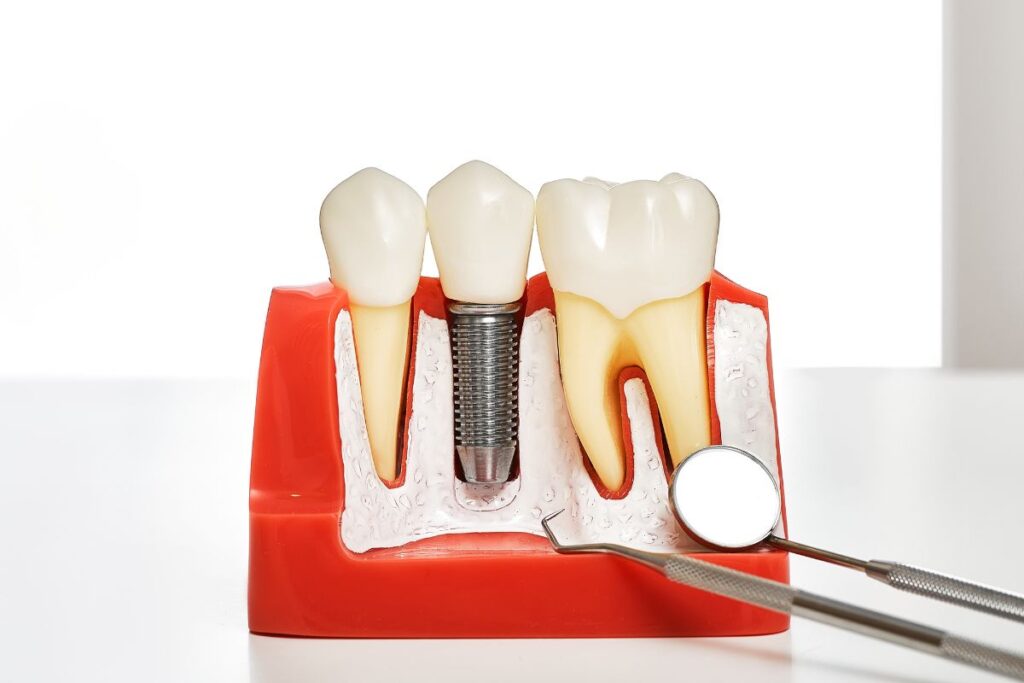
Imagine regaining the confidence to smile, chew, and speak without worry after losing a tooth. This transformation starts with a remarkable biological process that anchors artificial roots securely in your jaw. It forms the foundation for modern tooth replacements, turning what could be a temporary fix into a lasting solution. Let’s explore this key element and its role in restoring oral health.
Understanding Osseointegration
Osseointegration refers to the direct fusion between living bone and a metal implant surface. Swedish orthopedic surgeon Per-Ingvar Brånemark discovered it in the 1950s during titanium research. He noticed titanium bonded strongly with bone tissue. This breakthrough shifted dental practices. Today, it underpins successful implant procedures worldwide.
The term combines “osseo,” meaning bone, with “integration,” highlighting the seamless merge. Titanium’s biocompatibility makes it ideal. It resists corrosion and promotes cell attachment. Bone cells grow around the implant, creating a stable bond over time.
How Osseointegration Works in Dental Procedures
The process begins after placing a titanium post into the jawbone. Surgery involves a small incision in the gum to access the bone. The post acts like a tooth root. Healing starts immediately.
Bone cells migrate to the implant surface. They form a matrix that hardens into solid bone. This takes weeks to months. Blood supply increases around the area. Nutrients support new bone growth. The implant becomes part of the skeletal structure.
Full integration ensures the post withstands daily forces like biting. Without it, the replacement could loosen or fail. Patients often wear temporary coverings during this phase to protect the site.
Why Osseointegration Matters for Long-Term Success
This fusion provides unmatched stability. Unlike dentures that slip, integrated implants feel natural. They distribute bite forces evenly, preventing bone loss in the jaw.
It also preserves facial structure. Missing teeth lead to bone resorption over time. Integrated posts stimulate bone, maintaining density. This avoids a sunken appearance common with tooth loss.
Health benefits extend beyond aesthetics. Secure replacements improve nutrition by allowing varied diets. Speech clarity enhances too. Overall, it boosts quality of life for those with missing teeth.
Factors Influencing Osseointegration
Several elements affect the process. Bone quality ranks high. Dense, healthy jawbone supports better bonding. Conditions like osteoporosis may complicate it.
Lifestyle plays a role. Smoking hinders blood flow, slowing healing. Good oral hygiene prevents infections that disrupt integration.
Medical history matters. Diabetes can impair recovery if uncontrolled. Surgeons assess these risks beforehand.
Surgical technique is key. Precise placement maximizes contact with bone. Experienced professionals use imaging for accuracy.
Success Rates and Statistics
Dental professionals report high success with this process. Data shows impressive outcomes across studies.
Here’s a table summarizing key statistics on implant success linked to osseointegration:
| Time Frame | Success Rate | Source Notes |
|---|---|---|
| Overall | 95% | International studies |
| 10 Years | 97% | Long-term follow-ups |
| 20 Years | 75% | Extended survival data |
| With Bone Grafts | 85-99% | Augmented cases |
These figures highlight reliability. Early integration success often exceeds 98% in ideal conditions. Factors like patient health influence variations.
Common Concerns About the Process
Many wonder about discomfort. The surgery uses local anesthesia, minimizing pain. Post-op soreness resembles tooth extraction recovery. Over-the-counter meds help.
Healing time varies. Lower jaw integrates faster, often in 3-4 months. Upper jaw may take 4-6 months due to softer bone.
Failure risks exist but are low. Signs include persistent swelling or mobility. Early detection allows corrections.
Maintenance is straightforward. Brush and floss like natural teeth. Regular check-ups ensure longevity.
Trending FAQs on Osseointegration
Here are some frequently asked questions based on what people often search on Google, with clear answers:
- How long does osseointegration take for dental implants?
It typically spans 3-6 months, depending on jaw location and individual healing. Lower jaws heal quicker due to denser bone. - What happens if osseointegration fails?
The implant may become loose. Causes include infection or poor bone quality. Removal and retry with bone grafting often succeed. - Is osseointegration painful?
No, the process itself isn’t painful as it occurs during healing. Any discomfort comes from surgery and fades within days. - Can anyone achieve osseointegration?
Most can, but factors like smoking or uncontrolled diabetes raise risks. A thorough evaluation helps determine suitability. - How does osseointegration differ from other implant methods?
It provides a direct bone bond, unlike older techniques relying on mechanical fixation, leading to better durability.
These address top queries, easing common worries.
Enhancing Integration Through Best Practices
Preparation boosts outcomes. Quit smoking weeks before surgery. It improves circulation for faster bonding.
Nutrition aids too. Foods rich in calcium and vitamin D support bone health. Stay hydrated.
Follow post-care instructions. Avoid hard foods initially. Use prescribed rinses to prevent issues.
Advanced techniques help challenging cases. Bone grafts build volume where needed. Guided surgery ensures precision.
In Hawthorn Woods, IL, implant dentists focus on these steps for optimal results.
If you are searching for a implant dentistry near you, consider providers emphasizing patient education on this process.
Regular follow-ups monitor progress. X-rays confirm fusion before final restoration.
This approach demonstrates commitment to lasting oral health.
Have you ever felt self-conscious about gaps in your smile? Understanding this fusion process reveals how modern solutions mimic nature. It empowers informed choices for better well-being. Ready to explore options? Call (847) 550-5000 to schedule an appointment and start your journey.